
Understanding Whiplash: Symptoms and Recovery
- Home
- Understanding Whiplash: Symptoms and Recovery
Understanding Whiplash: Symptoms and Recovery
Whiplash is one of the most common injuries after a car accident—but also one of the most misunderstood. You may feel fine immediately after a crash, only to wake up a day or two later in serious pain. At Affection Health Care, we specialize in identifying and treating whiplash early to help you heal faster and avoid long-term complications.
🚗 What Is Whiplash?
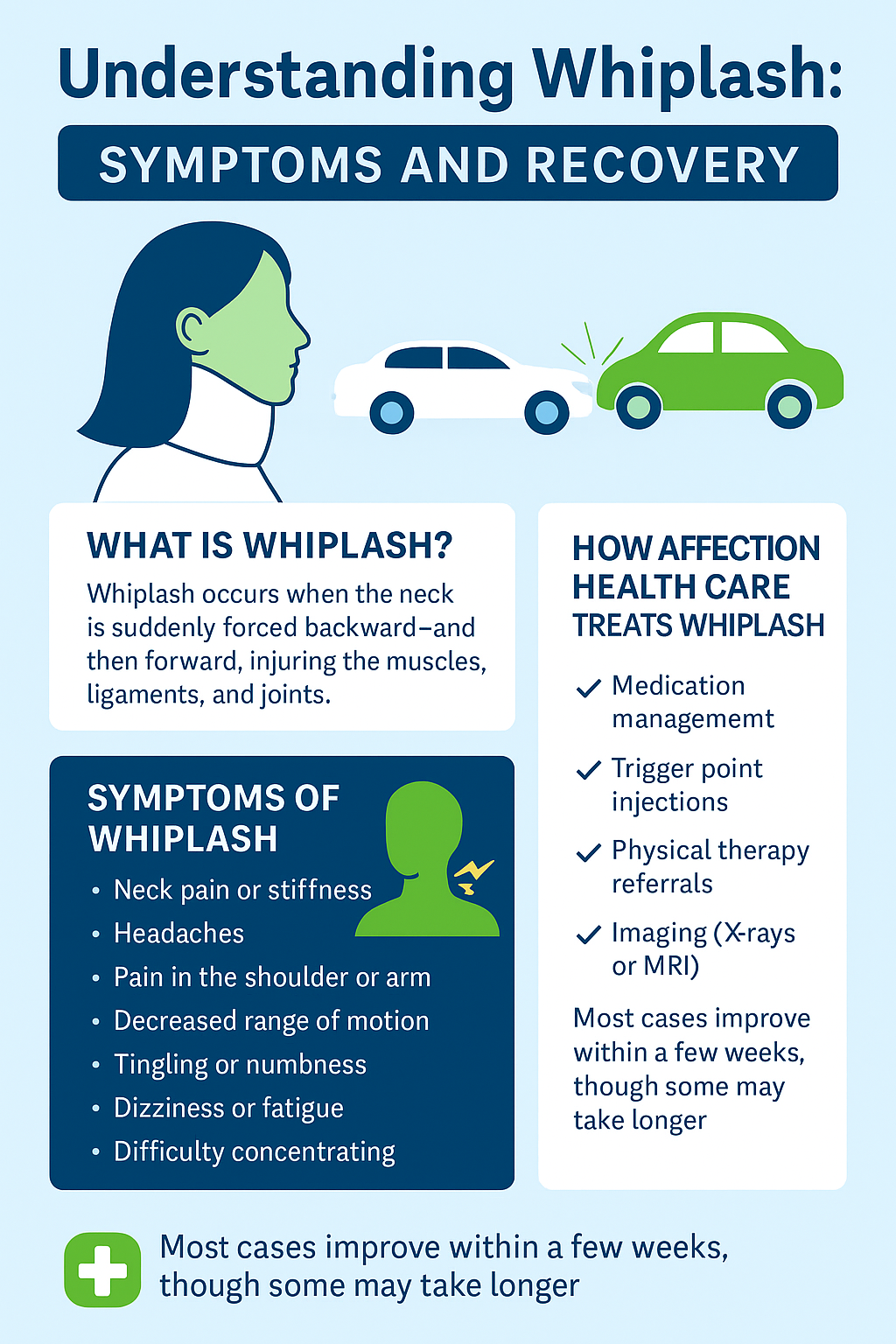
Whiplash occurs when the neck is suddenly forced backward and then forward—like the cracking of a whip. This sudden motion stretches and damages the muscles, ligaments, and joints in the neck.
It’s most common in rear-end car collisions, but it can also occur in sports injuries, physical assaults, or falls.
⚠️ Symptoms of Whiplash
Symptoms usually appear within 24–72 hours but may be delayed, which is why prompt medical attention is so important.
Common symptoms include:
- Neck pain or stiffness
- Headaches (often at the base of the skull)
- Pain in the shoulders, upper back, or arms
- Decreased range of motion in the neck
- Tingling or numbness in the arms
- Dizziness or fatigue
- Difficulty concentrating (a sign of concussion or brain strain)
In more severe cases, people may also experience blurred vision, ringing in the ears, or memory issues.
🧠 Why You Shouldn’t Ignore It
Many people brush off early symptoms as “normal soreness.” But untreated whiplash can lead to:
- Chronic neck and shoulder pain
- Ongoing headaches
- Reduced mobility
- Nerve damage
- Difficulty sleeping or focusing
If you’re involved in a car accident—even a minor one—get evaluated early, even if you feel okay at first.
🏥 How Affection Health Care Treats Whiplash
At Affection Health Care, we begin with a full physical exam and take a detailed account of your symptoms and how the injury occurred. Based on your condition, your treatment plan may include:
✅ Medication Management
To reduce pain and inflammation without over-relying on opioids.
✅ Trigger Point Injections
To target tight, painful knots in the neck or upper back muscles.
✅ Physical Therapy Referrals
To help restore motion, strengthen muscles, and reduce tension.
✅ Imaging (X-rays or MRI)
If needed to rule out serious spinal injury or disc issues.
✅ Telehealth Follow-Ups
To make sure your progress continues—even from home.
⏳ What Does Recovery Look Like?
Most cases of whiplash improve within a few weeks, but some can take months to fully heal—especially if left untreated.
Your recovery depends on:
- The severity of your injury
- How soon treatment begins
- How consistent you are with follow-up care
Our goal is not just to relieve your pain—but to prevent long-term complications.
⚖️ Whiplash & Personal Injury Cases
Whiplash is a common part of personal injury claims, and insurance companies often try to downplay it. That’s why we provide:
- Detailed medical documentation
- Objective findings from exams and imaging
- Progress reports for attorneys
- Lien-based treatment (no upfront cost if working with a PI lawyer)
📞 If You Think You May Have Whiplash, Don’t Wait
Getting prompt care protects your health—and your legal case. The sooner we evaluate your condition, the better your chances for a full recovery.
📅 Schedule your evaluation now at AffectionHealth.com
📞 Or call us at (350) 216-5774
Affection Health Care
Neck pain isn’t just a symptom—it’s a signal. Let’s treat it right.
- Share
