
Understanding Pain Signals in the Body
- Home
- Understanding Pain Signals in the Body
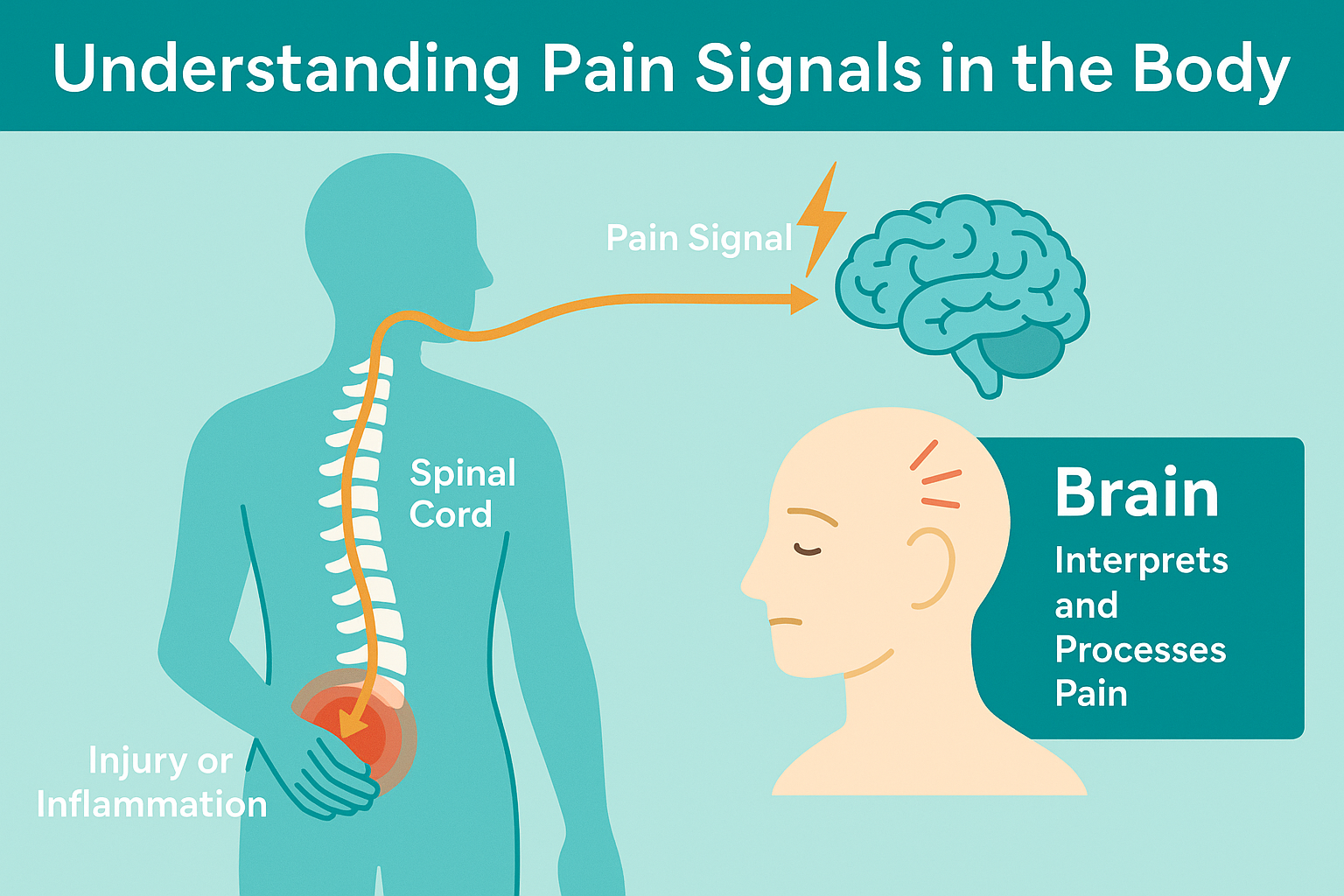
Understanding Pain Signals in the Body
Pain is your body’s alarm system. It tells you when something is wrong—whether it’s a stubbed toe, a pulled muscle, or a deeper chronic condition. But not all pain signals mean the same thing, and understanding how pain works can help you manage it more effectively.
At Affection Health Care, we believe education is key to healing. Here’s a breakdown of how pain signals work in your body, what they’re trying to tell you, and how we help you respond in the healthiest way.
🧠 What Is a Pain Signal?
Pain signals are messages sent from your nerves to your brain. They travel through your spinal cord to alert you that something is injured, irritated, inflamed, or not functioning properly.
Pain is not just a symptom—it’s a complex experience shaped by your body, brain, and emotions.
⚙️ Types of Pain Signals
🔹 Nociceptive Pain
- Caused by injury or inflammation
- Sharp, aching, or throbbing
- Common in sprains, arthritis, and post-surgical pain
- Example: You cut your finger or strain your back
🔹 Neuropathic Pain
- Caused by nerve damage or malfunction
- Feels like burning, tingling, or shooting pain
- Common in sciatica, diabetic neuropathy, or pinched nerves
- Example: Nerve pain after a herniated disc
🔹 Referred Pain
- Felt in a different location than the actual problem
- Example: Shoulder pain during a heart attack
🔹 Centralized or Chronic Pain
- Ongoing pain even after the injury has healed
- Linked to conditions like fibromyalgia
- Can be worsened by stress, anxiety, or poor sleep
- The brain becomes “sensitized” to pain over time
📈 How Your Brain Interprets Pain
The brain doesn’t just “feel” pain—it interprets it based on:
- Past experiences
- Mood and mental state
- Level of stress
- Sleep quality
- Physical activity
- Social support
That’s why two people can experience the same injury but report very different pain levels.
❗ When Pain Becomes a Problem
Pain is helpful in the short term, but when it lasts too long, it can:
- Disrupt your nervous system
- Cause muscle tension
- Lead to fatigue or insomnia
- Trigger emotional distress
- Decrease your mobility and quality of life
This is when professional help is essential.
🏥 How Affection Health Care Responds to Pain Signals
We look at:
- Where your pain is coming from
- What kind of pain it is
- How long it’s been going on
- How it affects your daily life
Then we build a custom care plan that may include:
- Trigger point or joint injections
- Non-opioid medications
- Physical therapy referrals
- Mind-body support
- Sleep and nutrition guidance
- Patient education to build confidence and understanding
📅 Ready to decode your body’s signals and finally feel better? Schedule today at AffectionHealth.com
📞 Call: (350) 216-5774
Affection Health Care
We don’t just treat pain—we help you understand it.
- Share
