
Treating Muscle Spasms Post-Collision
- Home
- Treating Muscle Spasms Post-Collision
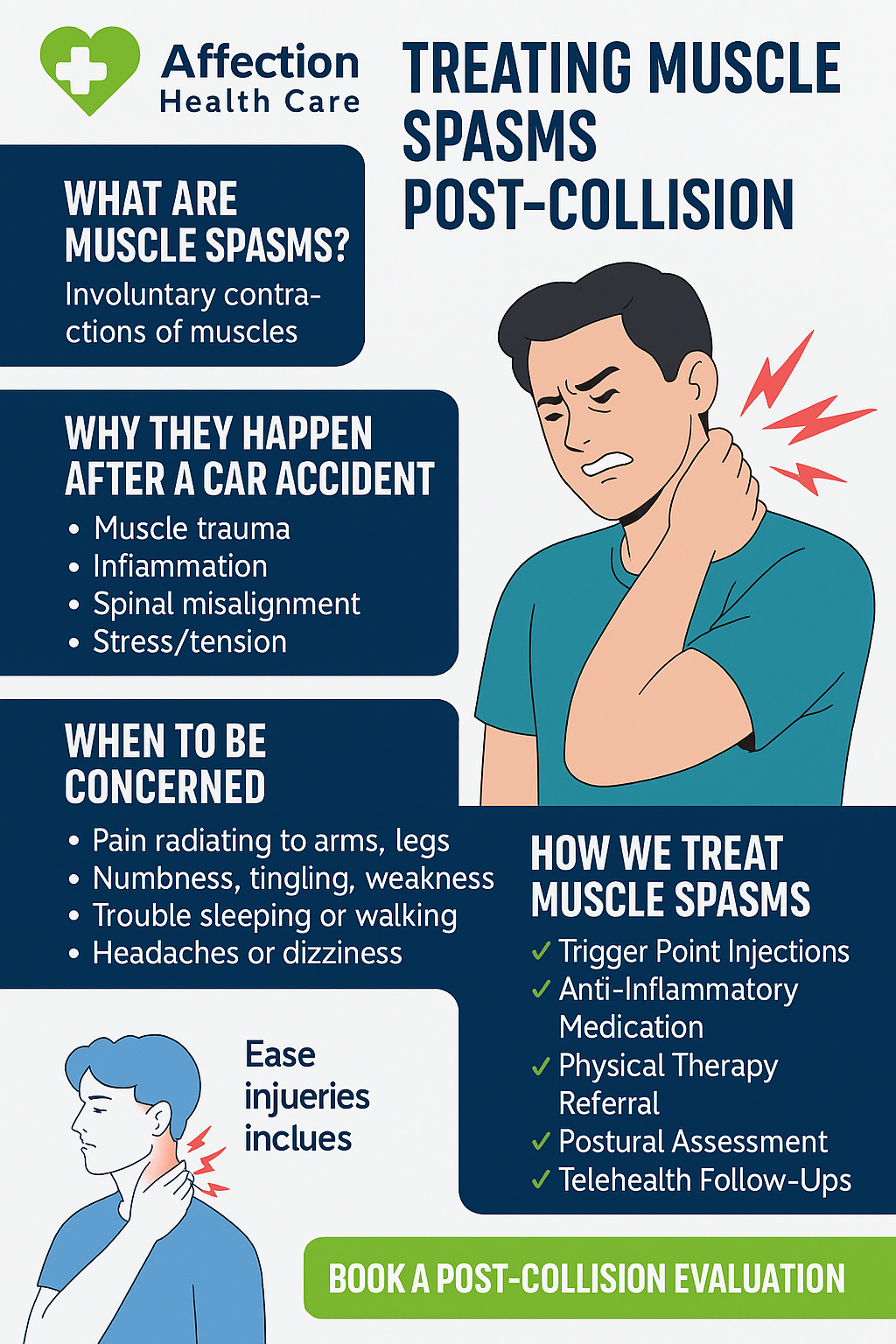
Treating Muscle Spasms Post-Collision
After a car accident, many people report sharp, cramping, or twitching pain in their back, shoulders, or neck. These are often muscle spasms—a common but painful reaction your body has to trauma.
At Affection Health Care, we see and treat muscle spasms in auto injury patients every day. While they’re often overlooked, untreated spasms can lead to chronic pain, poor posture, and long-term disability. Here’s what you need to know.
💥 What Are Muscle Spasms?
A muscle spasm is an involuntary contraction of a muscle. After a collision, your body may enter a protective mode, tightening certain muscles to guard against further injury. Unfortunately, this can cause:
- Sudden, intense pain
- Cramping or “knotting”
- Limited range of motion
- Muscle fatigue and soreness
They commonly occur in the:
- Neck (after whiplash)
- Upper and lower back
- Shoulders
- Rib cage or chest area
🚗 Why They Happen After a Car Accident
- Muscle trauma: Even without broken bones, your muscles may strain or tear.
- Inflammation: The body releases chemicals that irritate surrounding nerves and muscles.
- Spinal misalignment: Any shift in posture can cause nearby muscles to overcompensate.
- Stress and tension: Emotional trauma often leads to physical tightness.
Muscle spasms can appear immediately or develop days later.
⚠️ When to Be Concerned
Get evaluated if you notice:
- Spasms that don’t resolve in a few days
- Pain that radiates to arms or legs
- Numbness, tingling, or weakness
- Difficulty sleeping or walking
- Spasms combined with headaches or dizziness
These may signal deeper problems like nerve compression or disc injury.
🏥 How We Treat Muscle Spasms at Affection Health Care
We offer a personalized, multimodal approach that may include:
✅ Trigger Point Injections
A quick and effective solution for “knotted” muscles. These injections deliver medication directly into the spasm, relaxing the muscle and reducing inflammation.
✅ Anti-Inflammatory Medication
Helps reduce swelling and ease discomfort, especially in early stages.
✅ Physical Therapy Referrals
Targeted stretching, mobility work, and posture correction are crucial to long-term relief.
✅ Postural Assessments & Ergonomic Guidance
We identify movement patterns that worsen spasms and help you adjust daily habits.
✅ Telehealth Follow-Ups
We continue monitoring and adjusting your care plan remotely as you recover.
⚖️ Muscle Spasms in PI Claims
Insurance companies may dismiss muscle spasms as “minor,” but the impact can be severe and long-lasting. That’s why we:
- Document each visit clearly
- Note limitations caused by spasms
- Track progress and setbacks
- Communicate with your personal injury attorney
We also provide lien-based treatment—meaning you pay nothing out of pocket if you’re working with a PI lawyer.
📅 Don’t push through the pain. Book your post-accident evaluation at AffectionHealth.com
📞 Or call us at (350) 216-5774
Affection Health Care
Muscle spasms are loud signals from your body. Let’s listen and treat them right.
- Share
