
Medications Commonly Used in Pain Management
- Home
- Medications Commonly Used in Pain Management
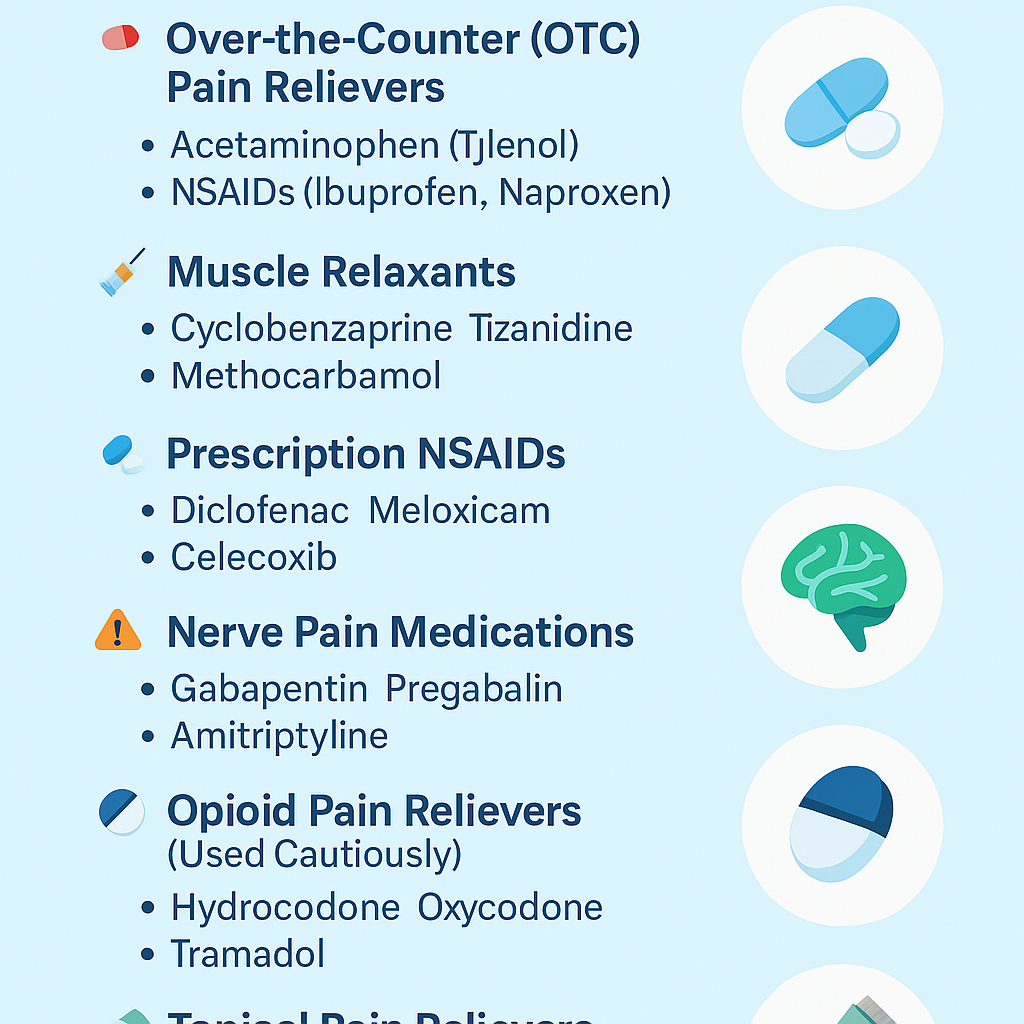
Medications Commonly Used in Pain Management
When you’re dealing with acute or chronic pain, medications can play a crucial role in restoring your comfort, improving function, and supporting your recovery. While medications are only one part of a complete treatment plan, understanding your options can help you make informed decisions about your care.
At Affection Health Care, we take a responsible, patient-centered approach to pain relief—offering a mix of medication and non-drug therapies tailored to your condition and lifestyle.
💊 1. Over-the-Counter (OTC) Pain Relievers
These are often the first step in managing mild to moderate pain.
✅ Acetaminophen (Tylenol)
- Reduces pain and fever
- Gentle on the stomach
- Commonly used for headaches, arthritis, and muscle pain
✅ NSAIDs (Non-Steroidal Anti-Inflammatory Drugs)
- Examples: Ibuprofen (Advil, Motrin) and Naproxen (Aleve)
- Reduce pain, swelling, and inflammation
- Often used for back pain, joint pain, and injuries
⚠️ Use with caution if you have stomach issues, kidney problems, or high blood pressure.
💉 2. Muscle Relaxants
These are prescribed when muscle spasms or tightness are part of your pain.
Examples:
- Cyclobenzaprine (Flexeril)
- Tizanidine (Zanaflex)
- Methocarbamol (Robaxin)
Ideal for: Back injuries, whiplash, neck stiffness
They may cause drowsiness, so driving or working immediately after use isn’t recommended.
💊 3. Prescription NSAIDs
Stronger than OTC versions, but still in the non-opioid category.
Examples:
- Diclofenac (Voltaren)
- Meloxicam (Mobic)
- Celecoxib (Celebrex)
Prescribed for moderate to severe pain, especially in inflammatory conditions.
🧠 4. Nerve Pain Medications
For pain caused by nerve damage, sciatica, or neuropathy, we may use:
Examples:
- Gabapentin (Neurontin)
- Pregabalin (Lyrica)
- Amitriptyline (low-dose for nerve pain/sleep)
These meds calm nerve signals and are often part of chronic pain plans.
⚠️ 5. Opioid Pain Relievers (Used Cautiously)
Opioids may be prescribed short-term for severe pain after surgery, serious injury, or when other options fail.
Examples:
- Hydrocodone (Norco, Vicodin)
- Oxycodone (Percocet, OxyContin)
- Tramadol
At Affection Health Care, we follow strict guidelines to:
- Limit duration of use
- Avoid long-term dependence
- Provide alternatives wherever possible
💊 6. Topical Pain Relievers
Applied directly to the skin to reduce pain in specific areas.
Examples:
- Lidocaine patches or creams
- Diclofenac gel (Voltaren)
- Capsaicin cream
Ideal for: Joint pain, arthritis, muscle soreness
🌿 7. Adjunctive Therapies
We may also recommend:
- CBD or cannabinoid-based products (where legally permitted)
- Anti-depressants that also relieve pain (e.g., duloxetine for fibromyalgia)
- Supplements such as magnesium or turmeric (as part of natural care plans)
🏥 Our Approach at Affection Health Care
We:
- Begin with non-opioid options first
- Review your medical history and goals
- Combine medications with physical therapy, injections, or other therapies
- Educate you on side effects, risks, and benefits
- Monitor your response and adjust accordingly
📅 Need help managing pain? Book a consultation at AffectionHealth.com
📞 Call: (350) 216-5774
Affection Health Care
Pain relief with purpose, not just pills.
- Share
