
How Diet Affects Pain and Inflammation
- Home
- How Diet Affects Pain and Inflammation
How Diet Affects Pain and Inflammation
What you put on your plate doesn’t just fuel your body—it can also affect how much pain and inflammation you feel. Chronic pain conditions like arthritis, fibromyalgia, back pain, and even nerve pain are heavily influenced by dietary choices.
At Affection Health Care, we help patients combine clinical treatments with lifestyle strategies—including nutrition—to support whole-body healing. Here’s how diet can either reduce or worsen pain, and what you can start eating today to feel better naturally.
🔥 What Is Inflammation, and Why Does It Matter?
Inflammation is your body’s natural response to injury or illness. But when it becomes chronic, it can lead to:
- Joint pain
- Muscle aches
- Headaches
- Nerve irritation
- Fatigue
- Autoimmune flares
The food you eat can either turn the fire down—or throw gasoline on it.
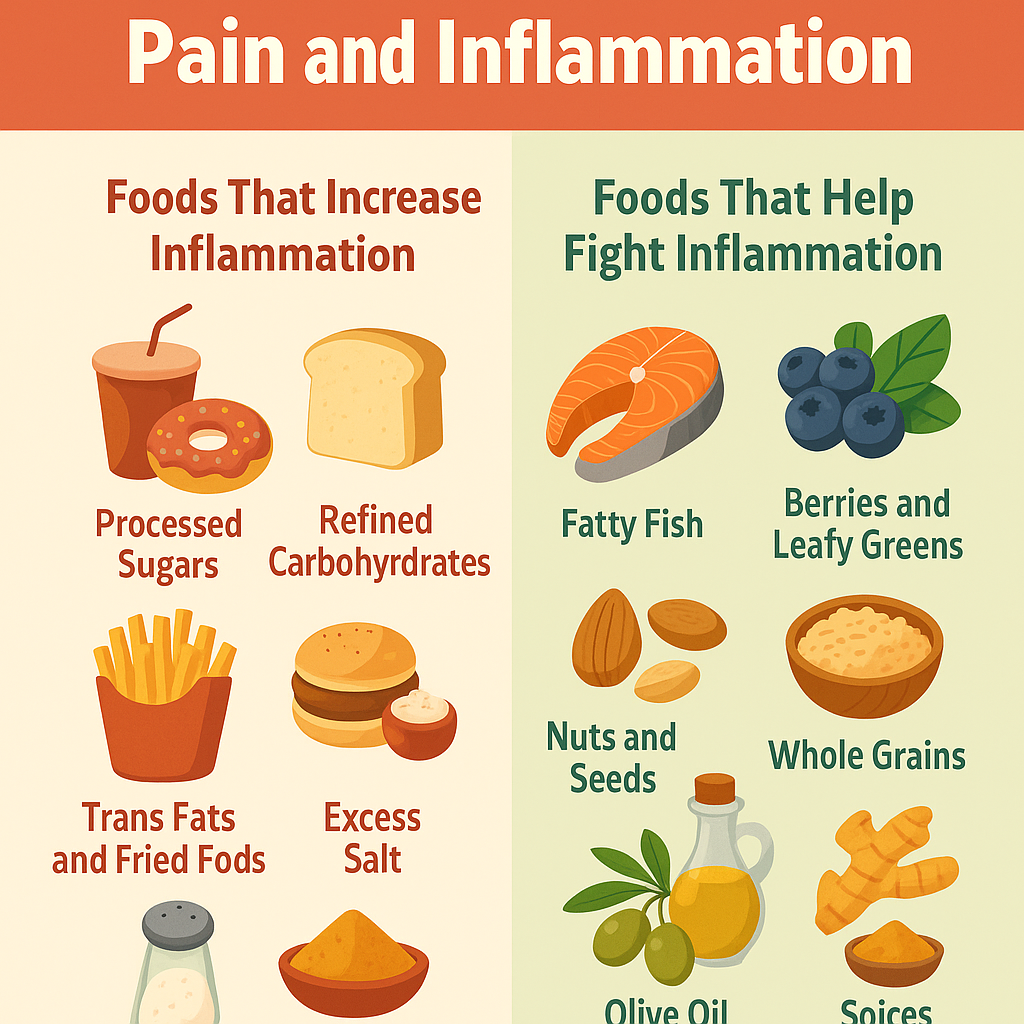
❌ Foods That Increase Inflammation and Pain
Avoid or limit these common culprits:
🍩 Processed Sugars
Cause insulin spikes and worsen joint pain. Found in sodas, pastries, candy, and sweetened cereals.
🍞 Refined Carbohydrates
White bread, pasta, and pastries cause blood sugar crashes that trigger inflammation.
🍟 Trans Fats and Fried Foods
Found in fast food, chips, and margarine. They increase “bad” cholesterol and inflammatory markers.
🧂 Excess Salt
Too much sodium can cause water retention and joint swelling.
🍺 Alcohol
In excess, it weakens the liver’s ability to process toxins and triggers systemic inflammation.
✅ Foods That Help Fight Inflammation
These nutrient-rich foods help your body heal and reduce pain naturally:
🐟 Fatty Fish
Salmon, sardines, and mackerel contain omega-3s that reduce joint stiffness and swelling.
🫐 Berries and Leafy Greens
Blueberries, spinach, kale, and broccoli are packed with antioxidants that fight oxidative stress.
🌰 Nuts and Seeds
Almonds, walnuts, and flaxseeds provide healthy fats and magnesium—both essential for muscle function.
🍠 Whole Grains
Brown rice, oats, and quinoa reduce C-reactive protein (CRP), a marker of inflammation.
🫒 Olive Oil
A staple of anti-inflammatory diets like the Mediterranean plan. Great for cooking or drizzling on meals.
🌿 Spices
Turmeric (with black pepper), ginger, and garlic are natural inflammation fighters.
💡 Simple Diet Tips to Reduce Pain
- Drink more water – flushes out toxins
- Add color to your plate – variety = more antioxidants
- Cook at home when possible – control what goes in
- Limit processed and packaged foods – fewer hidden sugars and additives
- Eat smaller meals more often – keeps energy and blood sugar stable
🧠 How Diet Affects Mental Health and Sleep Too
Anti-inflammatory foods also support:
- Mood stability
- Better sleep quality
- Faster healing
- Stronger immune function
When you eat better, your whole body—and mind—function better.
🏥 What We Recommend at Affection Health Care
As part of your care plan, we may discuss:
- Dietary changes
- Supplement options (like turmeric or magnesium)
- Meal planning tips
- Referrals to nutritionists if needed
We combine medical treatment with real-life strategies to reduce pain at the root.
📅 Want to create a pain-reducing lifestyle? Schedule your appointment at AffectionHealth.com
📞 Call: (350) 216-5774
Affection Health Care
Eat well. Hurt less. Heal naturally.
- Share
