
Head Injuries: When to Worry and What to Do
- Home
- Head Injuries: When to Worry and What to Do
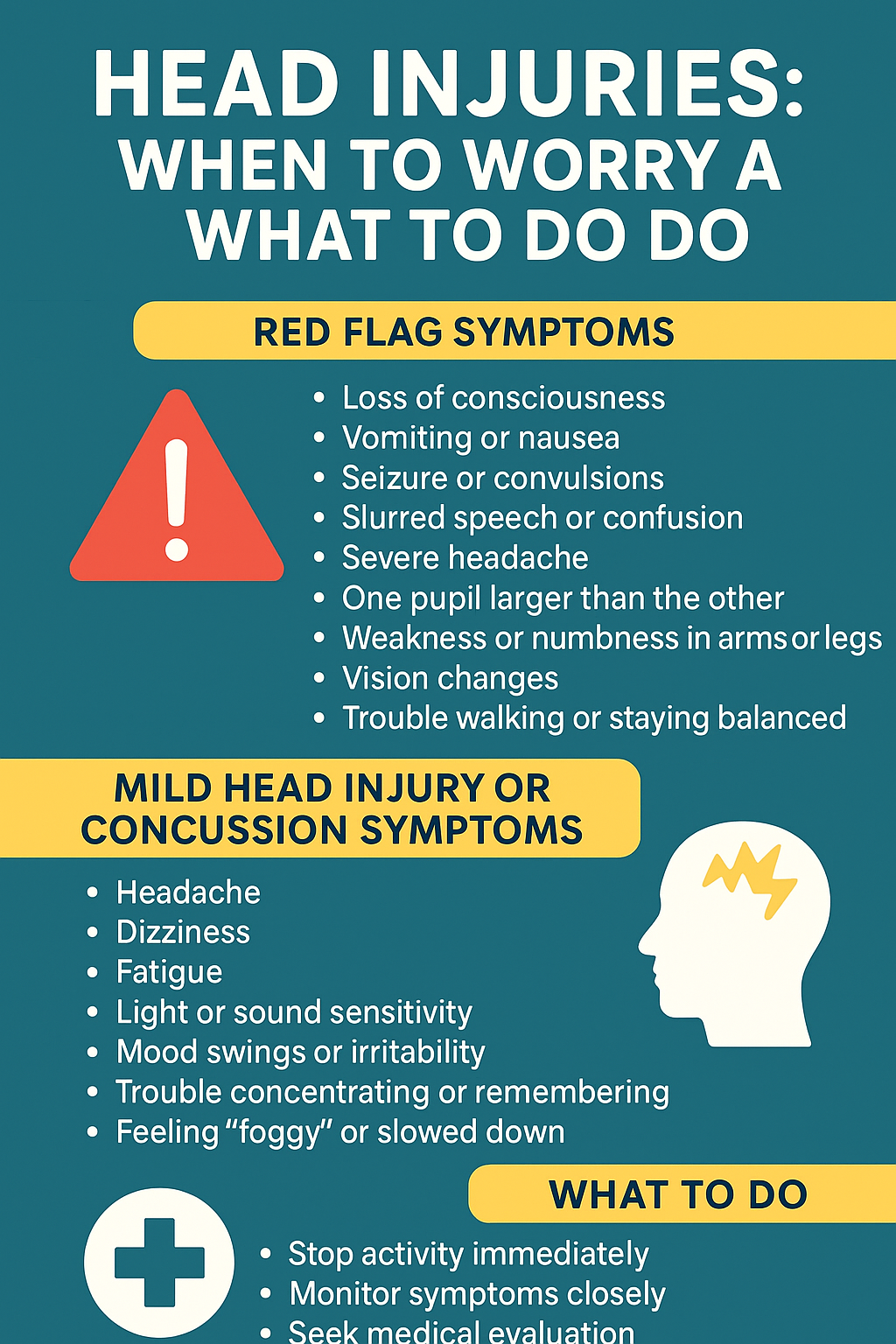
Head Injuries: When to Worry and What to Do
Whether it’s from a car accident, fall, or impact during sports, a head injury is something that should never be ignored. Even a seemingly minor bump can have serious consequences if left untreated.
At Affection Health Care, we treat head injuries with the urgency and expertise they deserve. Here’s what you need to know about when to worry—and what to do if it happens to you or someone you love.
⚠️ When Is a Head Injury Serious?
Any trauma to the head can be concerning. But the most important warning sign is a change in how the brain functions. This could be physical (like vomiting or balance problems) or mental (like confusion or slurred speech).
🚨 Red Flag Symptoms That Need Immediate Medical Attention
Call 911 or visit the emergency room if someone experiences:
- Loss of consciousness (even briefly)
- Vomiting or nausea
- Seizure or convulsions
- Slurred speech or confusion
- Severe headache that won’t go away
- One pupil larger than the other
- Weakness or numbness in arms or legs
- Vision changes or blurry sight
- Trouble walking or staying balanced
- Clear fluid draining from nose or ears
These signs may indicate a traumatic brain injury (TBI), internal bleeding, or a skull fracture.
🤕 Mild Head Injury or Concussion Symptoms
Even if symptoms are subtle, you should still be evaluated if you notice:
- Headache
- Dizziness
- Fatigue
- Light or sound sensitivity
- Mood swings or irritability
- Trouble concentrating or remembering
- Feeling “foggy” or slowed down
These could be signs of a concussion, the most common type of TBI. Recovery can take days to weeks and often requires rest and monitoring.
🧠 What to Do If You Suspect a Head Injury
- Stop activity immediately
Don’t let the person continue driving, working, or playing sports. - Monitor symptoms closely
Even if the injury seems mild at first, symptoms can worsen over time. - Avoid pain medications like ibuprofen or aspirin at first
These can increase bleeding risk. Stick with acetaminophen (Tylenol) if necessary—unless directed otherwise by a provider. - Seek medical evaluation
At Affection Health Care, we can assess your symptoms and recommend imaging if needed (like CT or MRI). - Limit screen time, loud noise, and activity
Concussion recovery requires brain rest. Avoid TV, phones, video games, and stressful environments.
💼 Head Injuries in Personal Injury (PI) Cases
If your head injury was caused by a car accident or fall, documentation is key. We provide:
- Objective medical notes
- Neurological assessments
- Referrals for imaging
- Communication with your PI attorney
- Lien-based treatment (no upfront cost)
🩺 How Affection Health Care Supports You
We help patients:
- Understand their symptoms
- Heal safely and fully
- Navigate the legal documentation process
- Get peace of mind with proper evaluation and care
📞 Don’t Guess—Get Checked
Head injuries can be silent and serious. The sooner you’re evaluated, the better the outcome.
📅 Schedule a head injury evaluation today at AffectionHealth.com
📞 Or call us directly at (350) 216-5774
Affection Health Care
Because your brain deserves nothing but the best.
- Share
