
How to Spot Early Signs of Hypertension
- Home
- How to Spot Early Signs of Hypertension
How to Spot Early Signs of Hypertension
Hypertension — also known as high blood pressure — is often called the “silent killer” because it usually doesn’t cause obvious symptoms. The good news? Knowing the early signs and risks can help you catch it before it becomes a serious health problem.
🩺 What Is Hypertension?
Blood pressure is the force of your blood pushing against your arteries. When this pressure stays too high for too long, it can lead to serious damage to your heart, brain, kidneys, and other organs.
🚨 Common Early Signs
While most people with high blood pressure feel no symptoms at all, you might notice some subtle signs:
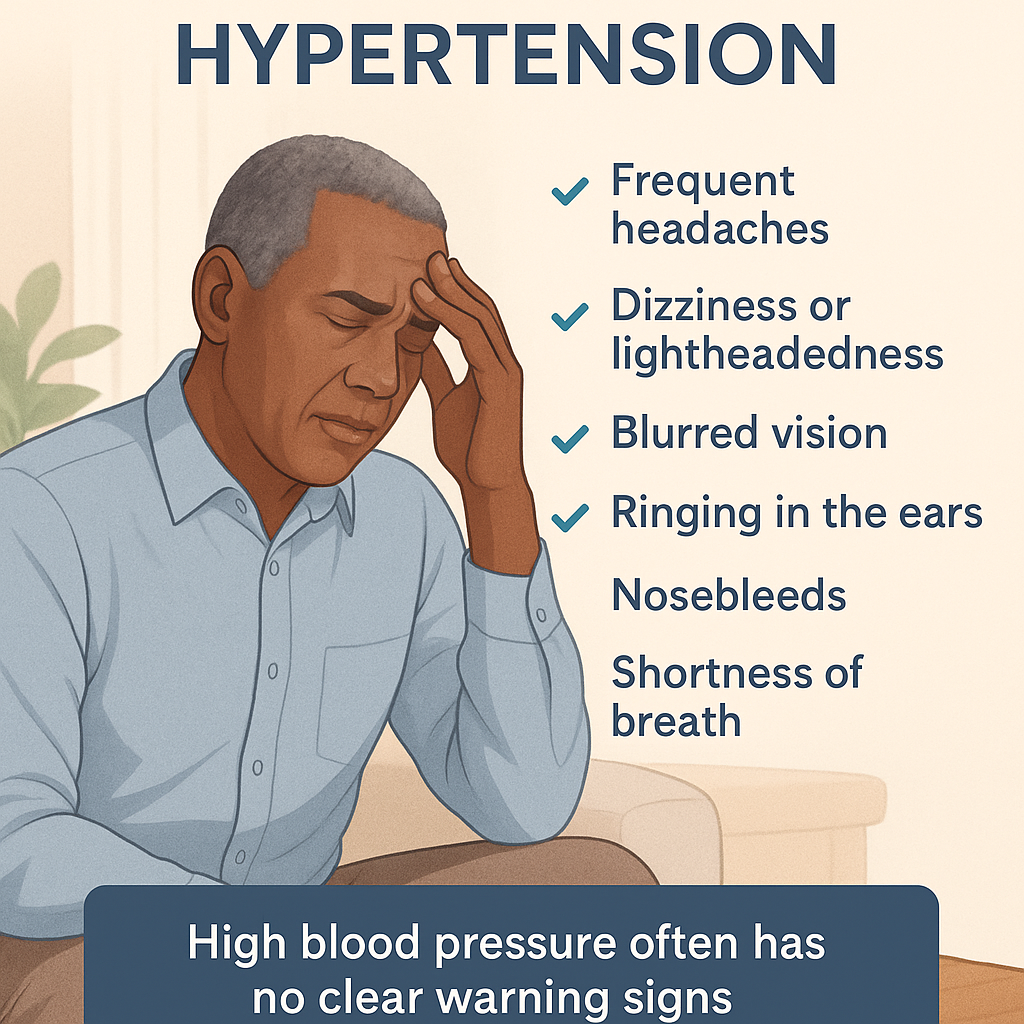
- Frequent headaches (especially in the morning)
- Dizziness or lightheadedness
- Blurred vision
- Ringing in the ears
- Nosebleeds
- Shortness of breath or a racing heart
If you experience these, it’s important to get checked — especially if they happen often.
⚠️ Risk Factors to Know
Some people are more likely to develop hypertension. Factors include:
- Family history of high blood pressure
- Being overweight
- Smoking and drinking too much alcohol
- Eating too much salt or processed foods
- Getting too little exercise
- Living with high stress
- Age — risk increases after 40
📏 Check Your Numbers
Since early-stage high blood pressure rarely has obvious signs, the most reliable way to catch it is to check your blood pressure regularly.
- A normal reading is around 120/80 mm Hg.
- Readings of 130/80 mm Hg or higher may mean you have or are at risk for hypertension.
🧡 Steps to Lower Your Risk
If you’re worried about hypertension, a few simple habits can help:
✅ Eat a balanced, low-salt diet
✅ Exercise for 30 minutes most days
✅ Maintain a healthy weight
✅ Manage stress through relaxation or meditation
✅ Limit alcohol and quit smoking
✅ Get your blood pressure checked at your doctor’s office or at home
🩺 Don’t Wait to Get Checked
High blood pressure often has no clear warning signs, so don’t wait until you feel sick. If you have risk factors or haven’t checked your numbers in a while, talk to your healthcare provider. Early detection and small changes can make a big difference for your long-term health. 💙
- Share
